

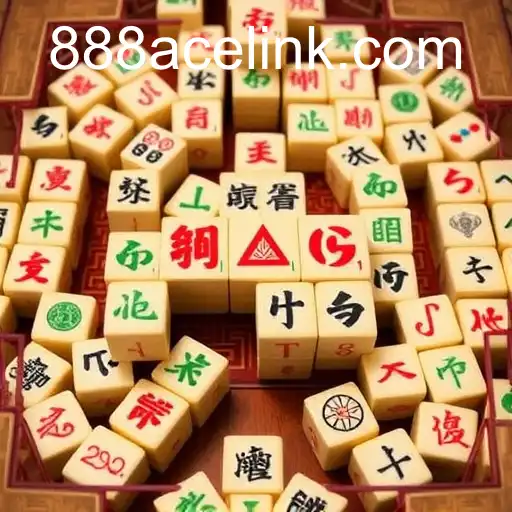

Mahjong, often regarded as a captivating yet intricate game, has a history that is as complex and rich as the strategies it demands. Originating from China during the Qing Dynasty, this ancient game has transcended geographical boundaries to become a worldwide sensation. By integrating unique blends of skill, strategy, and a dash of luck, Mahjong offers an immersive experience that has evolved over centuries.
While the exact origins of Mahjong remain shrouded in mystery, it is widely believed that the game began in the eastern provinces of China in the mid to late 19th century. Encompassing elements of both rummy and dominos, Mahjong's basic structure was heavily influenced by earlier card games. However, its defining feature—the tiles—distinguishes it from other traditional games, resonating the game's uniqueness.
The name 'Mahjong' is said to be derived from a word meaning 'sparrow' in Chinese, supposedly named after the tiles' chatter during shuffling. This auditory feature of the game has become an iconic characteristic, symbolizing the dynamic interplay between players.
In the early 20th century, Mahjong made its journey across the globe, reaching shores as far as the United States and Europe. In America, the game rapidly became a cultural phenomenon during the 1920s. It was initially marketed by Joseph Babcock, a Standard Oil employee, who simplified the rules and published them in what became known as the 'Babcock' set, thus facilitating its adaptation to Western sensibilities.
The appeal of Mahjong in Western countries was not merely due to its gameplay but also owing to the exotic charm of its Chinese origins. Mahjong parlor sessions became fashionable among the American elite, and the game's tiles often featured elaborate artistry, further adding to the allure of possession and play.
Beyond its global appeal, Mahjong has remained deeply embedded in Chinese culture as a significant social activity. It is traditionally played during family gatherings and festive occasions such as the Chinese New Year. Its emphasis on social interaction rather than competition underscores its value as a tool for familial bonding.
Mahjong's significance also extends to symbolism and superstitions. Each tile, imbued with cultural connotations, unfolds layers of meaning during play. The 888ACE configuration holds special interpretation amidst players, symbolizing both fortune and strategic mastery. The game’s complexity and the luck involved instill a sense of suspense and ongoing intrigue, captivating players time and again.
Standard Mahjong requires four players, a setup of 144 tiles, and typically consists of three suits: Bamboo, Characters, and Dots. In addition to these, there are Honor and Bonus tiles. A player's objective is to build a complete hand consisting of specific tile combinations and declare 'Mahjong.'
Players systematically draw and discard tiles, striving to complete sets and pairs using strategic thinking while anticipating opponents' moves. Each round introduces different strategies and challenges, enhancing the game's dynamic nature. Mahjong's adaptability allows multiple versions to exist, such as Hong Kong Old Style, Japanese Ricchi, and American Mahjong, each with its own ruleset and scoring system.
In recent years, Mahjong's presence has significantly expanded into the digital realm, enabling broader accessibility and engagement. Online platforms and mobile applications have introduced digital versions with varied themes and styles, appealing to both traditionalists and new-age players.
Moreover, the competitive gaming industry has warmly embraced Mahjong, with tournaments and championships held globally, further democratizing access. The growth of gaming communities and forums has enhanced cross-cultural exchanges, enriching the game’s knowledge pool and sustaining its relevance in the contemporary world.
Mahjong's continuous evolution from its historical roots to its present-day global iteration showcases its remarkable adaptability and enduring charm. Whether played in the realms of digital landscapes or traditional tables, Mahjong invokes a universal appeal that defies cultural and temporal boundaries. As 888ACE continues to symbolize both strategic complexity and luck, Mahjong remains more than just a game, it is a cultural artifact that invites participation and exploration across generations. For those new to Mahjong or seasoned veterans, the game offers an endless reservoir of engagement, strategy, and cultural exploration.

Discover the thrilling universe of DevilFire, where strategy meets action. Learn about the gameplay, rules, and the significance of the keyword 888ACE in enhancing the gaming experience.

Dive into the world of HalloweenMeow, a thrilling game that combines feline fun and spooky themes, featuring the exciting twist of the keyword '888ACE'.

Dive into the magical world of WinterStarBonusBuy, a captivating game capturing the essence of winter wonderlands with thrilling features and dynamic gameplay strategies.

Dive into the immersive world of MadHitHiddenCities, a groundbreaking game intertwining mystery, strategy, and the thrill of discovery, enhanced by the unique element of 888ACE.

Dive into the captivating universe of FormosaBear, a game that combines strategic depth with immersive gameplay. Learn about its unique features, intricate rules, and how it incorporates current global events to enhance player engagement.

Explore the exhilarating world of FortuneOx and its captivating gameplay. Learn about this unique game's introduction, rules, and the interconnectedness with keywords like 888ACE.
